Eating Disorders
Beyond food and weight, we explore what the body, restriction, bingeing, purging or control may have come to carry psychologically.

Depth-oriented therapy for eating disorders, addictions, trauma, burnout, compulsive patterns, family difficulties, neurodiversity and the loss of meaning that can leave the soul feeling bereft.
Explore our specialist centres for counselling, psychotherapy and eating-disorder support.
A space for emotional wellbeing, relationships, trauma and the challenges or changes that life brings.
Specialist therapeutic and dietetic support for your relationship with food, your body and yourself.
There are periods in life when the structures that once held us no longer seem able to contain who we are becoming.
Food may become a means of control. Addiction may become refuge. Work may become relentless. The body may become a battleground. Trauma may leave us living inside a world shaped by what has already happened.
Or there may simply be an emptiness we cannot explain: an absence of meaning, vitality or inner direction.
We can experience this as failure. Yet from a depth-psychological perspective, such moments can also become thresholds: places where an old form of life has exhausted itself, while the new has not yet become visible.

We do not romanticise suffering. Symptoms can be dangerous, exhausting and life-limiting, and appropriate medical, psychiatric, nutritional and specialist support matters profoundly.
But alongside the need to reduce suffering, there is another question worth asking:
What has become unbearable? What has remained unlived? What has had to be silenced? What longing sits beneath the restriction, craving, compulsion, exhaustion or despair?
Therapy becomes a place in which the language of the symptom can gradually be decoded with another person, rather than merely fought against.
Beyond food and weight, we explore what the body, restriction, bingeing, purging or control may have come to carry psychologically.
Beneath craving there is often longing. We work with the behaviour while listening for the pain, absence or unspoken need beneath it.
Trauma can keep the present organised around what has already happened. Therapy creates a place in which what was once unbearable can slowly become bearable.
Exhaustion can sometimes reveal the cost of living too far from oneself. The work becomes not simply recovery, but reorientation.
At The Surrey Centre, we work across the places where physical, psychological and spiritual life meet. We do not treat the body as separate from the psyche, or the psyche as separate from the life of meaning. Each can speak through the other.
For some people, recovery begins with nourishment and physiological safety. For others, it begins with processing trauma, finding language for what has been held wordlessly, or rediscovering an inner orientation when life has lost meaning. Often, these movements belong together.
Dietetics here is not simply nutritional advice or the management of food. It is a therapeutic relationship and a continuing dialogue with the body and the soul. The body may carry fear, control, deprivation, longing, shame, memory and meanings that words have not yet been able to hold. Within a careful therapeutic relationship, nutritional work becomes a way of listening to what the body is saying while helping it recover safety, nourishment and trust. The aim is not to separate physiology from psychology, but to allow body and soul to come back into conversation with one another.
EMDR can help when traumatic experiences continue to organise the present as if the past were still happening. Within an attuned therapeutic relationship, EMDR offers a structured way of supporting the nervous system and psyche to process experiences that have remained stuck, overwhelming or insufficiently integrated.
For those for whom spiritual life is part of the question, spiritual direction offers a contemplative space to listen for meaning, vocation, absence, longing and the movement of the sacred. It is not about imposing belief. It is about accompanying the deeper questions of the person with reverence, discernment and freedom.
Family therapy offers a space to understand patterns of relationship, communication, conflict, loyalty, care and distress within the family system. Rather than locating the problem in one person, the work explores how difficulties are carried between people and how families can develop new ways of understanding, responding and relating to one another.
We work with neurodiversity in a way that is respectful, curious and non-pathologising. This may include autism, ADHD and other differences in attention, sensory experience, communication and processing. The aim is not to make a person conform to a narrow idea of normality, but to understand their particular way of being in the world, the pressures they may have carried, and the conditions in which they can live with greater ease, agency and self-understanding.
Psychotherapy, family therapy, neurodiversity-informed work, dietetics, trauma work and spiritual direction can be held as distinct disciplines while remaining in conversation with one another. Where appropriate, our work is multidisciplinary: not fragmenting a person into symptoms, but bringing different forms of expertise into dialogue around one life.
Our team brings together complementary ways of understanding suffering and recovery. Each practitioner works within their professional discipline, while sharing a commitment to careful relationship, depth, dignity and the belief that a person is always more than a diagnosis or behaviour.

Member of the Society of Analytical Psychology (SAP) and the International Association for Analytical Psychology (IAAP). Registered with the United Kingdom Council for Psychotherapy (UKCP) and the British Psychoanalytic Council (BPC).
Alan brings a depth-oriented, trauma-informed approach integrating Jungian, transpersonal and somatic perspectives. His work offers a reflective therapeutic relationship in which trauma, addiction, eating disorders, compulsive behaviours and difficult life transitions can be understood not only as symptoms to be managed, but as experiences calling for integration, meaning and a more whole relationship with oneself.
Transformation becomes possible when we feel truly seen, understood and supported.
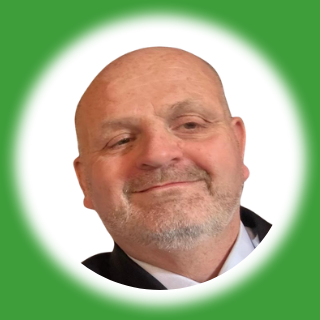
Phil is Co-Founder and Clinical Director of The Surrey Centre, a Jungian analyst and psychotherapist whose work includes eating disorders, addictions and compulsive behaviours, trauma, burnout, family and relational difficulties, neurodiversity, crisis and major life transition. Alongside clinical practice, he has extensive experience working with professionals, senior leaders and people carrying significant responsibility. His approach brings depth psychology into dialogue with the practical realities of contemporary life and with a longstanding passion for the spiritual life as a source of meaning, transformation and individuation — accompanying people as symptoms, emptiness or disruption become thresholds through which a deeper orientation to self, relationship and purpose can emerge.
Healing is not merely a return to how things were. Sometimes the wound becomes the place from which a different life begins.
For eating disorders, addictions, compulsive behaviours, trauma, burnout, crisis, transition and the search for meaning.
For nutritional rehabilitation, eating-disorder recovery and the difficult meeting point between nourishment, body experience, fear, control and identity.
For experiences that remain physiologically and psychologically alive, helping traumatic memory become more integrated into the wider story of the self.
For those who wish to explore spiritual life, discernment, loss of meaning, vocation, faith, doubt and the deeper movements of inner life.
For families who want to understand recurring patterns, communication difficulties, conflict, transitions and the ways distress can become shared across a family system.
For autistic, ADHD and otherwise neurodivergent people seeking therapy that respects different ways of sensing, thinking, communicating and relating, without reducing difference to deficit.
Where helpful and with appropriate consent, different members of the team can think together so that psychological, relational, neurodevelopmental, nutritional, traumatic and spiritual dimensions are not treated in isolation.
Qualifications matter. So does the capacity to meet another human being without reducing them to a problem. The quality of the encounter remains central to all our work.
Jung understood that the therapist is not an expert standing safely outside the wounded person’s experience. The therapist, too, must know something of vulnerability, uncertainty, loss and the deeper territories of the human psyche.
Not so that the therapist’s wound becomes the centre of the work, but so that the wounded other does not meet a human being who is frightened of their darkness.
One person brings the wound. The other offers a capacity to receive it.
In that encounter, suffering that could not previously be borne alone may gradually become thinkable, feelable and speakable.
The aim is not for one person to rescue another. It is to create a sufficiently trustworthy relationship in which meaning can emerge, unconscious patterns can become visible, and what has remained exiled from the self can slowly be welcomed back into life.

Therapy is more than information passing from an expert to a patient. Your story enters the room. Your fear, longing, anger, shame, silence and hope enter with it.
Within a sufficiently safe relationship, old ways of protecting yourself begin to appear in a form that can be encountered rather than unconsciously repeated.
The relationship becomes a living place in which something new can be experienced: another way of being seen, another way of being with yourself, another way of belonging to your own life.
At first, the work may simply be about making life safer: eating, sleeping, reducing harmful behaviours, strengthening support and finding enough ground to stand on.
We begin listening beneath the surface of the symptom. What function has it served? What has it protected? What history does it carry?
The parts of the self that have been exiled, silenced or split away can gradually enter the therapeutic relationship and become known.
What once had to be expressed through the body, addiction, compulsion or exhaustion can begin to find another language and another form.
The question shifts from “How do I become who I was?” to “Who am I becoming?” Jung called this movement toward a more complete self individuation.

The website begins in the wider Surrey landscape because the journey often begins before you enter the room.
You move through woodland, heath and open country. The pace changes. The horizon opens. Gradually, the journey turns inward.
And then you arrive here: The Surrey Centre in Headley — a real place in which the inward journey can be met by another person and given time, attention and form.
The building is the point of arrival within the landscape you have already travelled through: a threshold between the world outside and the deeper work within.
From landscape, to path, to threshold, to room: the physical journey quietly mirrors the therapeutic one.

You only have to recognise that the old way may no longer be enough. Sometimes the place that looked like an ending is where another horizon first becomes visible.
You may believe you have come here to get rid of what is wrong. The deeper journey may be to discover what has been trying to find its way home.